
EVENTS
Culture Change in Long-Term Institutional Settings: Systemic Transformation, Social Inquiry, and Experiential Practice | A Didactic and Experiential Educational Series

DATES:
Wednesday, March 11, 2026
TIME:
Pacific Time (USA, Canada): 8:00 – 10:00 AM
Mountain Time (USA, Canada): 9:00 – 11:00 AM
Central Time (USA, Canada): 10:00 AM – 12:00 PM
Eastern Time (United States): 11:00 AM – 1:00 PM
United Kingdom (GMT): 3:00 – 5:00 PM
Central Europe (CET): 4:00 – 6:00 PM
Nigeria: 4:00 – 6:00 PM
Turkey: 6:00 – 8:00 PM
Nepal: 8:45 – 10:45 PM DURATION: A two-hour educational fundraising workshop LANGUAGE: English; Translated Captions Available COST: All proceeds and donations will support A Future Without Poverty global initiative—specifically benefiting youth social clubs for children and adolescents at key developmental stages in the United States, Mexico, Nepal, Costa Rica, Bangladesh, Türkiye, Sierra Leone, and beyond.
Professionals / General Public: $80
Tele'Drama & Psychodrama Current Trainees: $70
Students / Retired: $60
Alternative registration options:
Stan Ingman, PhD
Mountain Time (USA, Canada): 9:00 – 11:00 AM
Central Time (USA, Canada): 10:00 AM – 12:00 PM
Eastern Time (United States): 11:00 AM – 1:00 PM
United Kingdom (GMT): 3:00 – 5:00 PM
Central Europe (CET): 4:00 – 6:00 PM
Nigeria: 4:00 – 6:00 PM
Turkey: 6:00 – 8:00 PM
Nepal: 8:45 – 10:45 PM DURATION: A two-hour educational fundraising workshop LANGUAGE: English; Translated Captions Available COST: All proceeds and donations will support A Future Without Poverty global initiative—specifically benefiting youth social clubs for children and adolescents at key developmental stages in the United States, Mexico, Nepal, Costa Rica, Bangladesh, Türkiye, Sierra Leone, and beyond.
Professionals / General Public: $80
Tele'Drama & Psychodrama Current Trainees: $70
Students / Retired: $60
Alternative registration options:
- Submit a donation of any amount HERE — your donation will also serve as your registration.
- Contact the Tele’Drama office for alternative payment options: zoomroom.international@teledrama.org
Stan Ingman, PhD
Faculty:
Co-creators of the Culture Change in Institutional Settings academic course, developed in 2012 and offered as part of master’s and doctoral-level programs at a state university:
Dr. Stan Ingman, PhD – Academic Lead & Institutional Culture Scholar
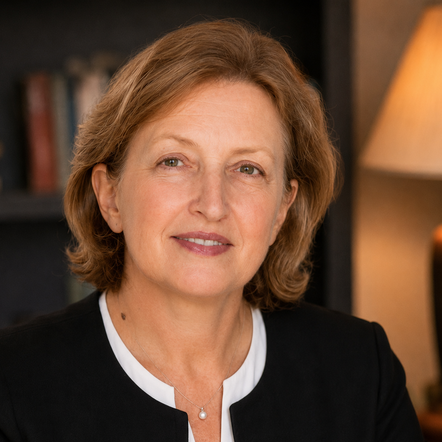
Dr. Daniela Simmons, PhD, TEP – Founder of Tele'Drama International; Developer of the Experiential Model for Systemic Culture Change
Culture Change in Long-Term Institutional Settings:
Systemic Transformation, Social Inquiry, and Experiential Practice
A Didactic and Experiential Educational Series
Series Overview
This educational series presents a multi-perspective, experiential exploration of the Culture Change movement as it applies to long-term institutional settings worldwide. Drawing from social inquiry, systems thinking, and experiential methods, the series examines how institutional cultures are created, maintained, and transformed—and how these cultures profoundly shape the lives of people who live and work within them.
Culture Change challenges outdated, institutional-centered, provider-driven models that often prioritize efficiency, control, and compliance over human dignity, autonomy, and meaningful relationships. Such models frequently fail to respond to the evolving psychological, emotional, and social needs of individuals in care. In contrast, Culture Change promotes a shift toward person-directed, dignity-based, and relationship-centered practices, emphasizing choice, voice, flexibility, community, and quality of life.
Across the series, participants will explore how daily practices, leadership styles, staffing models, organizational hierarchies, communication patterns, and physical environments interact to reinforce—or disrupt—institutional culture. Particular attention is given to the role of power, roles, identity, and group dynamics, and to the conditions required for sustainable systemic transformation, including self-directed teams, collaborative decision-making, and values-driven leadership.
This is an original, international, and innovative program combining didactic instruction, guided research, and experiential learning.
The series is facilitated by faculty with decades of expertise in institutional culture, psychosocial methods, and international systems change.
This series is designed for:
Learning Objectives
Across the series, participants will:
Workshop Session One of the Series
Session 1: What Is Culture Change? Foundations, Definitions, and Values
This first workshop serves as Session One of the Culture Change series and provides the conceptual and experiential foundation for all future sessions, with additional workshop topics and dates to be announced.Session One introduces the origins, definitions, and core values of Culture Change, situating the movement within broader historical, social, and institutional contexts. Participants will be introduced to systems thinking, voice, roles, and collaborative structures, and will begin examining how institutional cultures are constructed and sustained through everyday practices and interactions.Through didactic input and experiential exploration, participants will reflect on their own professional and institutional contexts, identify dominant cultural patterns, and begin framing questions and themes for ongoing inquiry and group-based projects. This session is appropriate for both newcomers to Culture Change and those with prior experience who wish to deepen and contextualize their understanding.
No prior participation is required.
Session One stands on its own while also serving as the entry point into the broader series.
A Future Without Poverty is a global initiative led by an international non-profit organization committed to empowering communities, providing essential resources, and creating sustainable solutions to eliminate poverty. This workshop invites participants from the United States and around the world—including Mexico, Nepal, Costa Rica, Bangladesh, Türkiye, Sierra Leone and beyond—to engage in a collective exploration of the causes and possible solutions to global poverty through the experiential method of sociodrama. Participants will embody roles such as policymakers, community leaders, and individuals directly impacted by poverty, fostering empathy, creative problem-solving, and collaborative action. Groups will connect internationally via Zoom for this powerful, shared experience. All proceeds from this workshop series will be donated to A Future Without Poverty, directly supporting youth social clubs for children and adolescents at critical developmental stages. These programs focus on education, community building, emotional development, and empowerment—helping young people develop the skills, resilience, and hope needed to break cycles of poverty and build sustainable futures.
Co-creators of the Culture Change in Institutional Settings academic course, developed in 2012 and offered as part of master’s and doctoral-level programs at a state university:
Dr. Stan Ingman, PhD – Academic Lead & Institutional Culture Scholar
Dr. Daniela Simmons, PhD, TEP – Founder of Tele'Drama International; Developer of the Experiential Model for Systemic Culture Change
Culture Change in Long-Term Institutional Settings:
Systemic Transformation, Social Inquiry, and Experiential Practice
A Didactic and Experiential Educational Series
Series Overview
This educational series presents a multi-perspective, experiential exploration of the Culture Change movement as it applies to long-term institutional settings worldwide. Drawing from social inquiry, systems thinking, and experiential methods, the series examines how institutional cultures are created, maintained, and transformed—and how these cultures profoundly shape the lives of people who live and work within them.
Culture Change challenges outdated, institutional-centered, provider-driven models that often prioritize efficiency, control, and compliance over human dignity, autonomy, and meaningful relationships. Such models frequently fail to respond to the evolving psychological, emotional, and social needs of individuals in care. In contrast, Culture Change promotes a shift toward person-directed, dignity-based, and relationship-centered practices, emphasizing choice, voice, flexibility, community, and quality of life.
Across the series, participants will explore how daily practices, leadership styles, staffing models, organizational hierarchies, communication patterns, and physical environments interact to reinforce—or disrupt—institutional culture. Particular attention is given to the role of power, roles, identity, and group dynamics, and to the conditions required for sustainable systemic transformation, including self-directed teams, collaborative decision-making, and values-driven leadership.
This is an original, international, and innovative program combining didactic instruction, guided research, and experiential learning.
The series is facilitated by faculty with decades of expertise in institutional culture, psychosocial methods, and international systems change.
This series is designed for:
- Professionals working in long-term care, elder care, corrections, disability services, education, mental health, healthcare, and other institutional or community-based systems
- University students and advanced trainees in social work, psychology, public health, education, criminal justice, sociology, nursing, gerontology, and global or social studies
- Leaders, supervisors, educators, and change agents seeking to understand and influence institutional culture and practice
Learning Objectives
Across the series, participants will:
- Understand the philosophy, history, and core principles of the Culture Change movement
- Analyze institutional care systems through the lens of social inquiry and systemic transformation
- Explore how institutional culture shapes identity, relationships, power, and well-being
- Examine the impact of leadership, communication, team dynamics, and the physical environment on lived experience
- Apply role theory, group process, and experiential methods to real-world institutional case examples
- Co-create research-informed and practice-oriented projects addressing institutional transformation
Workshop Session One of the Series
Session 1: What Is Culture Change? Foundations, Definitions, and Values
This first workshop serves as Session One of the Culture Change series and provides the conceptual and experiential foundation for all future sessions, with additional workshop topics and dates to be announced.Session One introduces the origins, definitions, and core values of Culture Change, situating the movement within broader historical, social, and institutional contexts. Participants will be introduced to systems thinking, voice, roles, and collaborative structures, and will begin examining how institutional cultures are constructed and sustained through everyday practices and interactions.Through didactic input and experiential exploration, participants will reflect on their own professional and institutional contexts, identify dominant cultural patterns, and begin framing questions and themes for ongoing inquiry and group-based projects. This session is appropriate for both newcomers to Culture Change and those with prior experience who wish to deepen and contextualize their understanding.
No prior participation is required.
Session One stands on its own while also serving as the entry point into the broader series.
A Future Without Poverty is a global initiative led by an international non-profit organization committed to empowering communities, providing essential resources, and creating sustainable solutions to eliminate poverty. This workshop invites participants from the United States and around the world—including Mexico, Nepal, Costa Rica, Bangladesh, Türkiye, Sierra Leone and beyond—to engage in a collective exploration of the causes and possible solutions to global poverty through the experiential method of sociodrama. Participants will embody roles such as policymakers, community leaders, and individuals directly impacted by poverty, fostering empathy, creative problem-solving, and collaborative action. Groups will connect internationally via Zoom for this powerful, shared experience. All proceeds from this workshop series will be donated to A Future Without Poverty, directly supporting youth social clubs for children and adolescents at critical developmental stages. These programs focus on education, community building, emotional development, and empowerment—helping young people develop the skills, resilience, and hope needed to break cycles of poverty and build sustainable futures.
For partial scholarship opportunities contact zoomroom.international@teledrama.org
or submit here
OTHER EVENTS IN Workshops

Beyond Peace: Sociodrama for Survival in an Uncertain World
SATURDAY, OCTOBER 24, 2026
3-HOUR
Presenters: Ron Wiener, PhD, Valerie Monti Holland
Information & Registration
AGING WELL: EMBRACING LIFE’S NEXT CHAPTERS - A Sociodramatic Exploration of Aging Across the Human Lifespan
SUNDAY, OCTOBER 25, 2026
2 HOURS
Presenters: Daniela Simmons, PhD, TEP
Information & Registration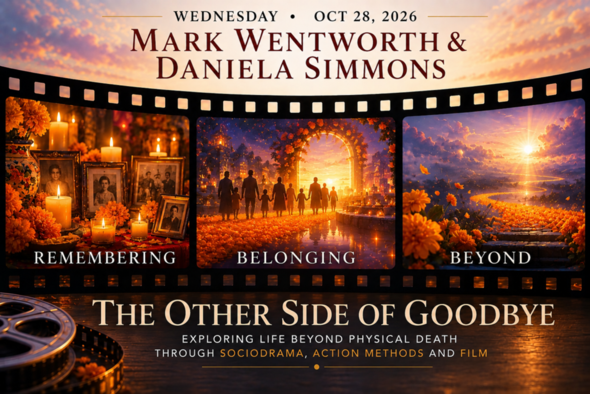
THE OTHER SIDE OF GOODBYE: Exploring Life Beyond Physical Death Through Sociodrama, Action Methods and Film
WEDNESDAY • OCTOBER 28, 2026
2 HOURS
Presenters: Daniela Simmons, PhD, TEP, Mark Wentworth
Information & Registration
Tired of Not Knowing: Healing Uncertainty Fatigue Through Psychodrama \ Monthy Series
FIRST WEDNESDAYS OF EACH MONTH, 2026 (FEB–DEC): FEBRUARY 4, MARCH 4, APRIL 1, JUNE 3, JULY 1, AUGUST 5, SEPTEMBER 2, OCTOBER 7, NOVEMBER 4, DECEMBER 2
10 MONTHS · 2 HOURS PER MONTH · ATTEND ALL OR ANY
Presenters: Daniela Simmons, PhD, TEP
Information & Registration
EMBODIED BUDDHIST PSYCHOLOGY & PSYCHODRAMA AND SOCIOMETRY IN CLINICAL PRACTICE
FRIDAYS: SEPTEMBER 11; OCTOBER 2; NOVEMBER 6; DECEMBER 4, 2026
4 SESSIONS • 2 HOURS EACH • ATTEND ALL SESSIONS OR ANY OF THEM
Presenters: Daniela Simmons, PhD, TEP, Jaye Moyer, LCSW, TEP, CTP-2
Information & Registration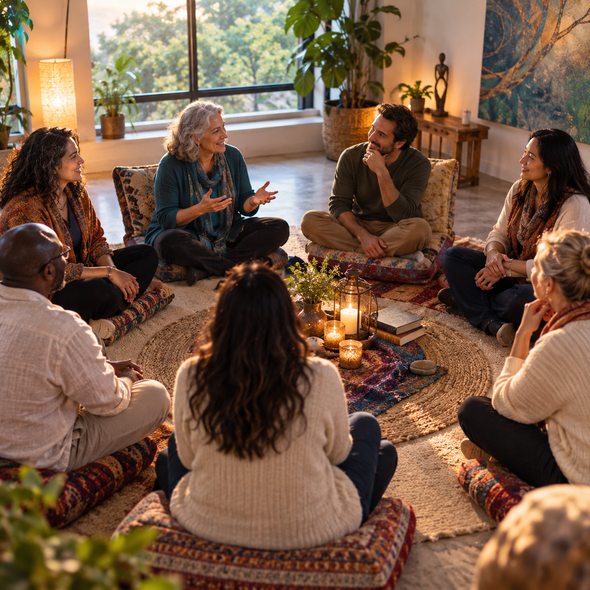
Exploring the Map of Grief™ Through Storytelling
SATURDAY, NOVEMBER 7, 2026
3-HOUR
Presenters: Ron Wiener, PhD, Cristina Hockl
Information & Registration
APPLIED PSYCHODRAMA SERIES: November 11: SOLILOQUY & ASIDE: Psychodramatic Techniques for Giving Voice to the Unspoken - From Ancient Theatrical Traditions through Moreno’s Theatre of Spontaneity to Contemporary Psychodrama Practice
SECOND WEDNESDAY OF EACH MONTH: NOV 11, DEC 9, JAN 13
MONTHLY 2-HOUR WORKSHOP | PARTICIPANTS MAY ATTEND ANY OR ALL OF THE SESSIONS.
Presenters: Daniela Simmons, PhD, TEP, Gülşen Büyükşahin, MA, PAT, Tele'Drama Associate Trainer
Information & Registration
e-Psychodrama International Personal Growth Circle: Online Group for Exploring and Healing Relationships
NOVEMBER 18, 2026
2-HOUR, FULLY EXPERIENTIAL PSYCHODRAMA SESSION ON THE THIRD WEDNESDAY OF EACH MONTH.
Presenters: Daniela Simmons, PhD, TEP
Information & Registration
Integrating Gottman’s Work and Psychodrama: From Dreams Within Conflict to the Art of Compromise
WEDNESDAY, DECEMBER 7 & 14, 2026
2 SESSIONS ON 2 CONSECUTIVE WEDNESDAY: JOIN ONE OR BOTH SESSIONS
Presenters: Daniela Simmons, PhD, TEP, Violeta Kadieva, PhD, LMFT-S
Information & Registration
BURNOUT RECOVERY & ROLE RECLAIMING THROUGH PSYCHODRAMA: Experiential Workshop
SUNDAY, TBD
2 HOURS
Presenters: Daniela Simmons, PhD, TEP
Information & Registration

ACTING THE UNCONSCIOUS: DREAM WORK THROUGH PSYCHODRAMA
TBD
2-HOUR
Presenters: Daniela Simmons, PhD, TEP
Information & Registration
Workshops Offered by Tele'Drama Practitioners & Trainers
VARIOUS DATES AVAILABLE
90 MIN | 3 HOURS